
Namibia's Seabirds are in Serious Trouble
Namibia's coastline is home to a wide diversity of wildlife, with many endemic seabird species. Seabirds serve as key indicators of the state and health of the marine ecosystem because they are visible and are top predators. And they are in serious trouble, facing:
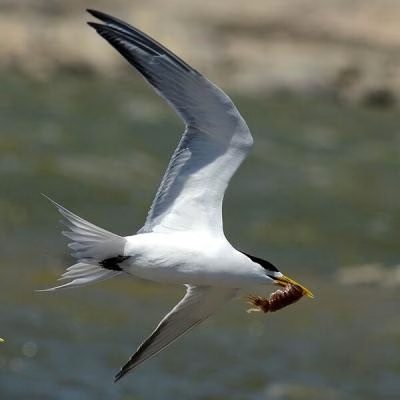
Food scarcity
Overfishing of anchovy and sardine populations by commercial fisheries: African Penguin, Cape Gannet and Cape Cormorant.
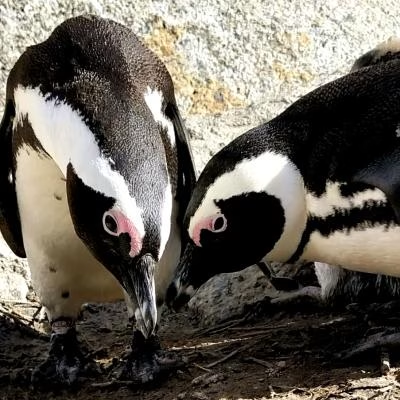
Breeding constraints
Marine developments and operations, such as industrial port developments and activities, ship-to-ship bunkering, finfish aquaculture and proposed offshore windfarms, are emerging as further threats to the breeding seabirds in the Namibian Islands' Marine Protected Area.
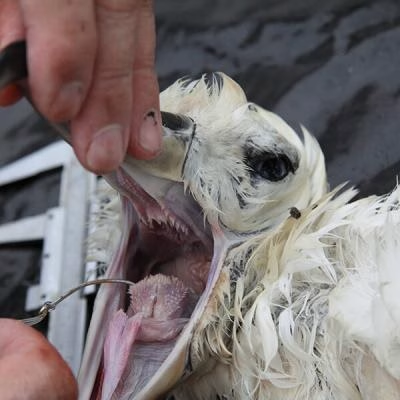
Incidental bycatch by commercial fishing
Incidental bycatch in fisheries refers to the unintentional capture of non-target species during fishing operations. This includes several species of seabirds and bycatch has become a major threat to the survival of seabird populations in the region.
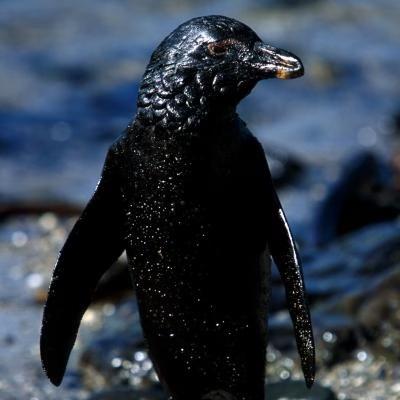
Degraded environment
Marine developments and operations, such as industrial port developments and activities, ship-to-ship bunkering, finfish aquaculture and proposed offshore windfarms, are emerging as further threats to the breeding seabirds in the Namibian Islands' Marine Protected Area.
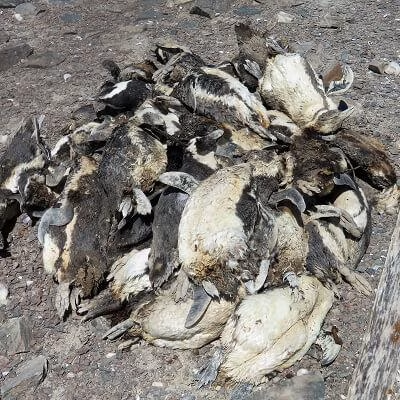
Disease
Recent outbreaks of diseases such as bird flu have had significant impacts on some species.
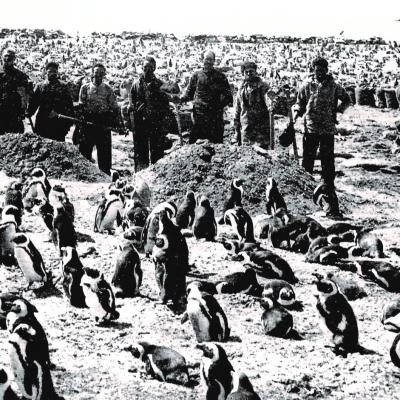
Impacts of historic threats
In the 1840s, after the value of guano as an agricultural fertiliser became known, accumulated deposits of seabird guano were stripped from many southern African islands.