

Regulations relating to Namibian Islands? Marine Protected Area: Marine Resources Act, 2000
Regulations relating to Namibian Islands? Marine Protected Area: Marine Resources Act, 2000
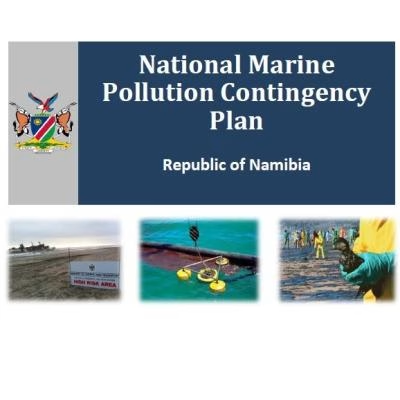
National Marine Pollution Contingency Plan
National Marine Pollution Contingency Plan
It is now nearly 10 years since Namibia?s 1st National Oil Spill Contingency Plan (NOSCP) was approved by Cabinet, giving effect to Namibia?s obligations under the United Nations Convention on the Law of the Sea, 1982 and the International Convention on Oil Pollution Preparedness, Response and Cooperation, 1990.
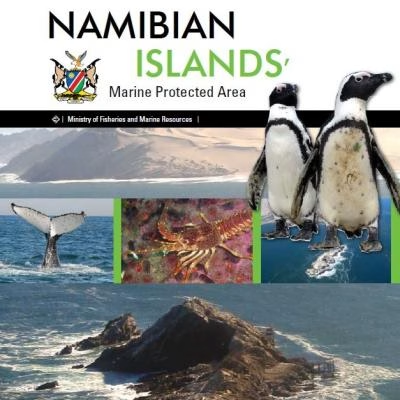
Namibian Islands’ Marine Protected Area
The Ministry of Fisheries and Marine Resources (MFMR) recognizes that the unique and fragile marine ecosystem bordering the Namibian coast is a valuable national asset and that all of our marine resources need to be carefully looked after for the benefit of all Namibians now and in future.
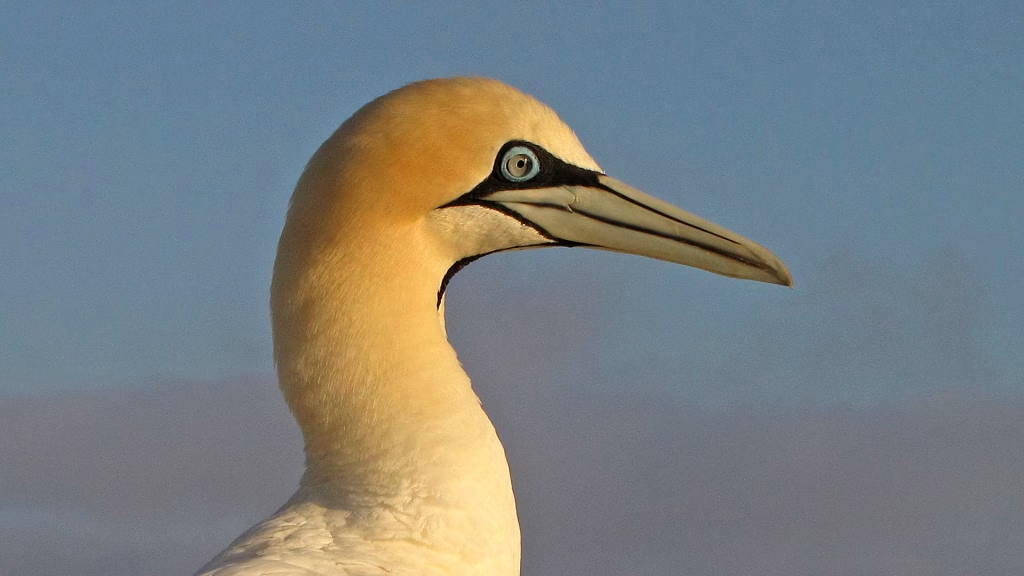
Namibia’s Cape Gannet populations have crashed in recent years
Seabirds status ? mainly Penguins, Gannets, Cape Cormorants – are the best indicators of the health of the marine pelagic system.
The Namibian Islands’ Marine Protected Area: using seabird tracking data to define boundaries and assess their adequacy
Ludynia K, Kemper J, Roux J-P 2012. The Namibian Islands’ Marine Protected Area: Using seabird tracking data to define boundaries and assess their adequacy. Biological Conservation 156: 136-145.
The initial journey of an endangered penguin: implications for seabird conservation
Sherley RB, Ludynia K, Lamont T, Roux JP, Crawford RJM, Underhill LG (2013) The initial journey of an Endangered penguin: implications for seabird conservation. Endang Species Res 21: 89-95.
Surviving off junk
Ludynia K, Roux J-P, Kemper J, Underhill LG (2010) Surviving off junk: low energy prey dominates the diet of African penguins Spheniscus demersus at Mercury Island, Namibia, between 1996 and 2009. African Journal of Marine Science 32: 3, 563-572.
Storms and heat limit the nest success of Bank Cormorants
Sherley RB, Ludynia K, Underhill LG, Jones R, Kemper J 2012. Storms and heat limit the nest success of Bank Cormorants: Implications of future climate change for a surface-nesting seabird in southern Africa. Journal of Ornithology 153: 441-455.
Seabirds of the Benguela ecosystem: utilisation, long-term changes and challenges
Makhado AB, Braby R, Dyer BM, Kemper J, Mcinnes AM, Tom D, Crawford RJM (2021). Seabirds of the Benguela Ecosystem: Utilisation, Long-Term Changes and Challenges. Birds – Challenges and Opportunities for Business, Conservation and Research.
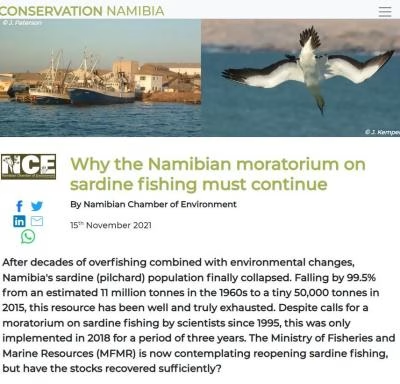
Why the Namibian moratorium on sardine fishing must continue
Blog post on Conservation Namibia by Namibian Chamber of Environment, 15th November 2021.
After decades of overfishing combined with environmental changes, Namibia’s sardine (pilchard) population finally collapsed.
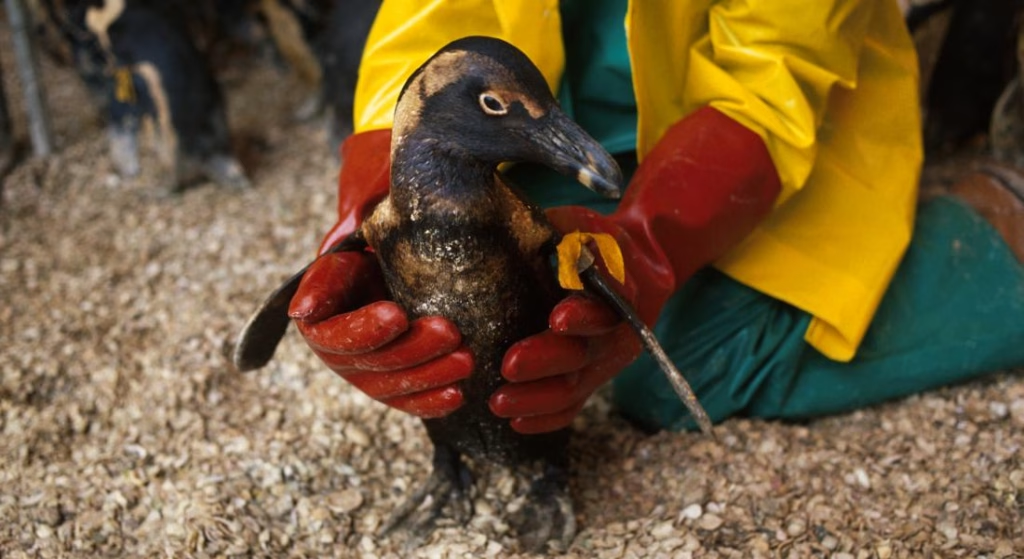
The Treasure oil spill ? one of the largest animal rescue missions in history
The Treasure Oil Spill ? 20 years on. What one of the largest animal rescue missions in history can tell us about wildlife response preparedness.
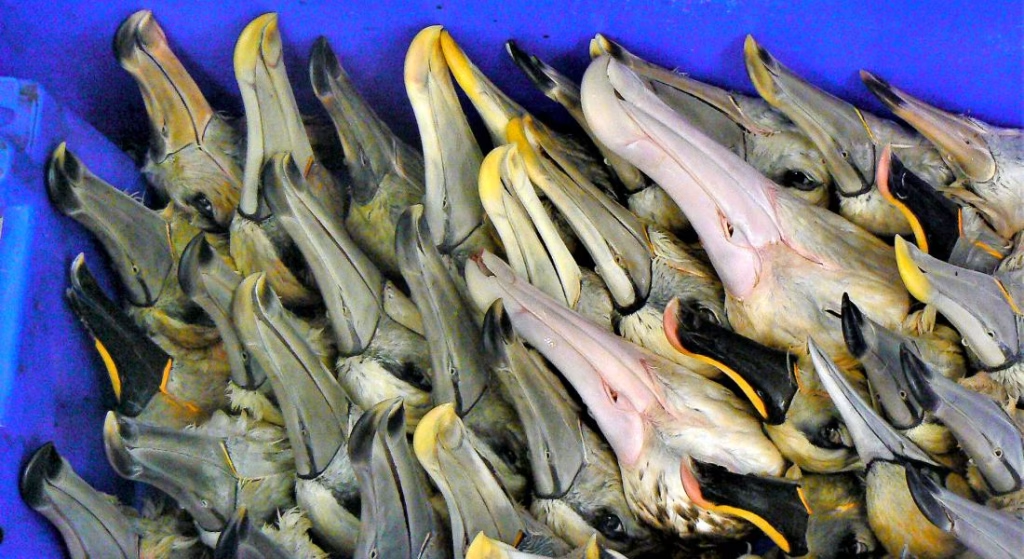
Bycatch in fishing is a significant cause of seabird mortality in Namibia
By-catch in industrial fishing is a significant cause of mortality of seabirds and is thought to be one of the main reasons for the decline of albatrosses. Of 22 species of albatross, fifteen species are threatened with extinction.
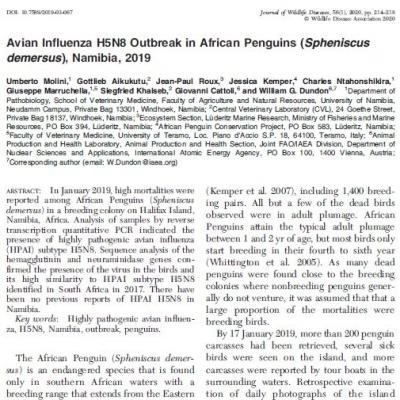
Avian Influenza H5N8 Outbreak in African Penguins (Spheniscus demersus), Namibia, 2019
In January 2019, high mortalities were reported among African Penguins (Spheniscus demersus) in a breeding colony on Halifax Island, Namibia, Africa. Analysis of samples by reverse transcription quantitative PCR indicated the presence of highly pathogenic avian influenza (HPAI) subtype H5N8.
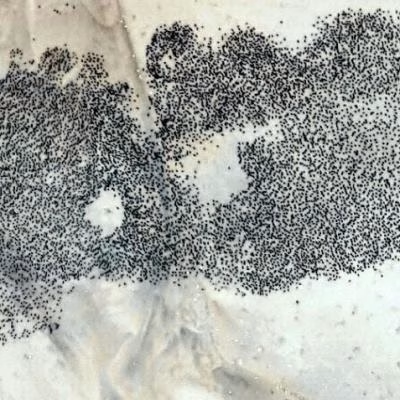
Angolan island paradise for Cape Cormorants
Blog post on Conservation Namibia by By Gail C. Potgieter, 9th August 2019.
Take a close look at the image. Each black dot is a Cape Cormorant (see below) as seen from a light aircraft. Can you count the cormorants? This aerial view of a colony of Cape Cormorants is a composite of several of the thousands of images taken during a 2017 survey of Ilha dos Tigres, an island off the coast of Angola. The purpose of this survey was to document all visible animals using this island, so every dot?
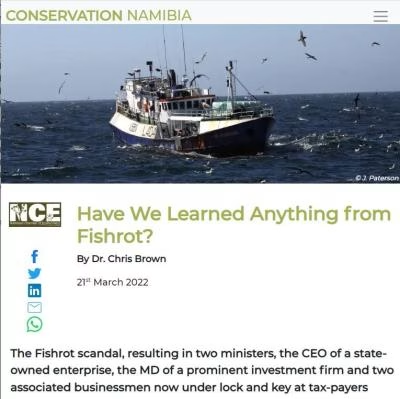
Have we learned anything from Fishrot?
Blog post on Conservation Namibia by By Dr. Chris Brown, 21st March 2022.
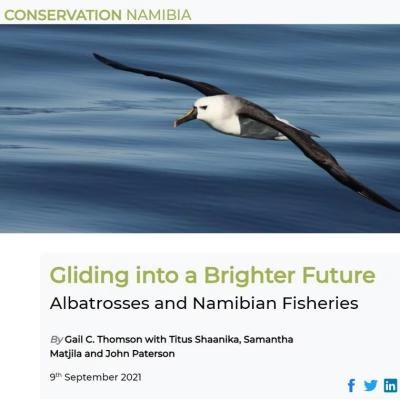
Gliding into a brighter future: albatrosses and Namibian fisheries
Blog post in Conservation Namibia by Gail C. Thomson with Titus Shaanika, Samantha Matjila and John Paterson, 9th September 2021.
Foraging behaviour of Bank Cormorants in Namibia: implications for conservation
Ludynia K, Jones R, Kemper J, Garthe S, Underhill LG 2010. Foraging behaviour of bank cormorants in Namibia: Implications for conservation. Endangered Species Research 12: 1.
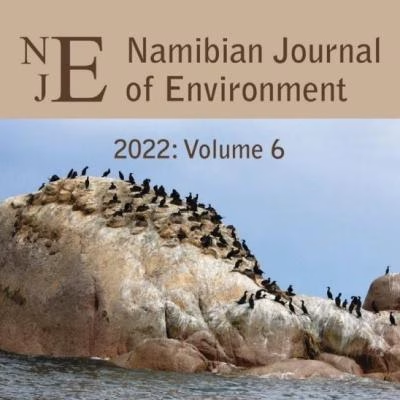
Food limitation of seabirds in the Benguela ecosystem and management of their prey base
Crawford RJM, Sydeman WJ, Tom DB, Thayer JA, Sherley RB, Shannon LJ, McInnes AM, Makhado AB, Hagen C, Furness RW, Carpenter-Kling T & Saraux C (2022) Food limitation of seabirds in the Benguela ecosystem and management of their prey base. Namibian Journal of Environment 6 A: 1-13.
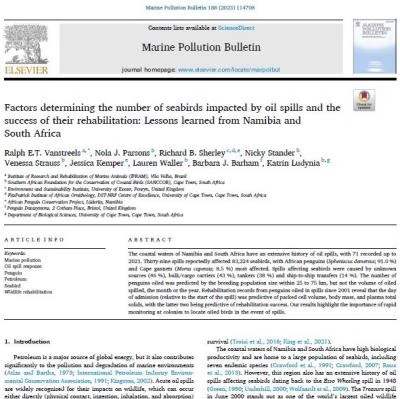
Factors determining the number of seabirds impacted by oil spills and the success of their rehabilitation: lessons learned from Namibia and South Africa
Vanstreels RET, Parsons NJ, Sherley RB et al. 2023. Factors determining the number of seabirds impacted by oil spills and the success of their rehabilitation: Lessons learned from Namibia and South Africa. Marine Pollution Bulletin 188.
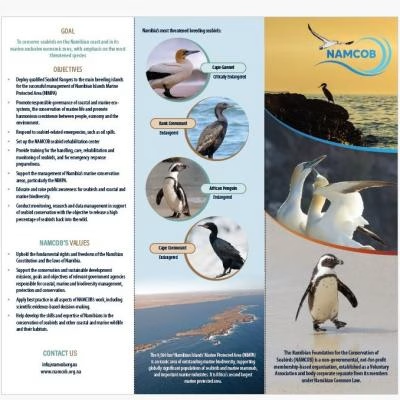
NAMCOB Brochure
Brochure introducing NAMCOB. It outlines our goal, objectives, values and organisational structure and gives an overview of key threats to seabirds; information on emergency disaster response; monitoring, research and action; membership categories and more.