
Marine Environment
Regions
Namibia's coastline stretches across four political regions; namely the Kunene, Erongo, Hardap, and Karas regions. This stretch ~1,600km stretch of coastline forms a critical link in the East Atlantic Flyway, the migratory corridor connecting Arctic breeding grounds to wintering and staging sites across western and southern Africa. The cold, nutrient-rich Benguela Current runs the length of this coast, sustaining exceptional productivity that supports both resident seabird colonies and the millions of migratory waterbirds passing through each year.
-
Erungo Region
Lorem Ipsum is simply dummy text of the printing and typesetting industry. Lorem Ipsum has been the industry’s standard dummy…
-
Hardap Region
Lorem Ipsum is simply dummy text of the printing and typesetting industry. Lorem Ipsum has been the industry’s standard dummy…
-
Kharas Region
Lorem Ipsum is simply dummy text of the printing and typesetting industry. Lorem Ipsum has been the industry’s standard dummy…
-
Kunene Region
Lorem Ipsum is simply dummy text of the printing and typesetting industry. Lorem Ipsum has been the industry’s standard dummy…
Together We Can Make a Difference
Volunteer
Please complete the form below to volunteer with NAMCOB.
Volunteer
Volunteer
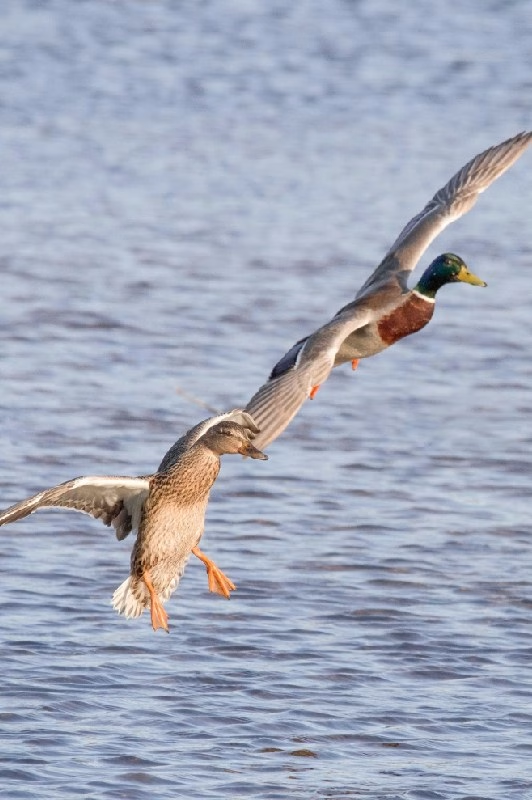
Give your time where it counts. Support field monitoring, breeding colony surveys, and rescue operations along the Namibian coast.
Donate
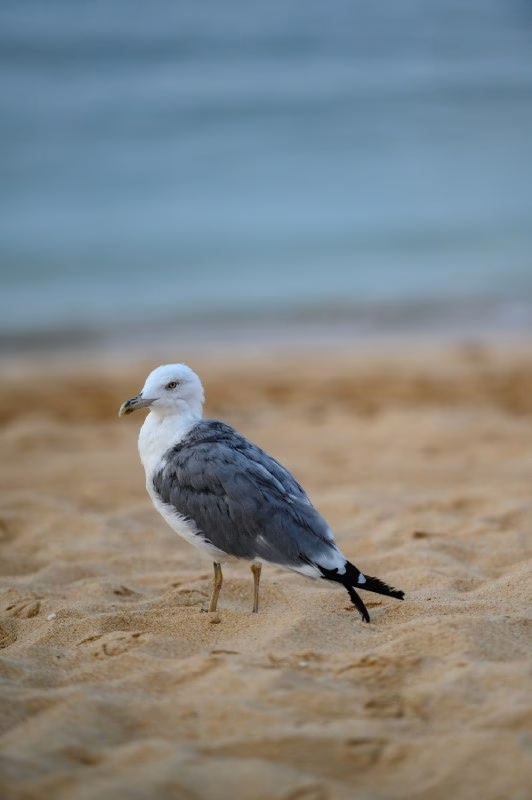
Your support funds rescue equipment, veterinary care, and our new seabird rehabilitation facility in Lüderitz. Every contribution helps save a life.
NIMPA
The Namibian Islands’ Marine Protected Area (NIMPA)
Apart from providing food and shelter for diverse plant and animal life, the southern Namibian coastline, with its extensive reefs and associated kelp beds offers important nursery grounds for juvenile and larval stages of rock lobsters and some fish, and an array of bays provide breeding habitat for marine mammals, including seals, dolphins and the majestic Southern right whale. A number of islands, islets and rocks dotted along thesouthern Namibian coast provide valuable breeding habitats and roosting grounds for a range of birds of high conservation importance. However, the balance and health of this unique and delicate ecosystem is being threatened in a number of ways - mainly through the effects of human activities.
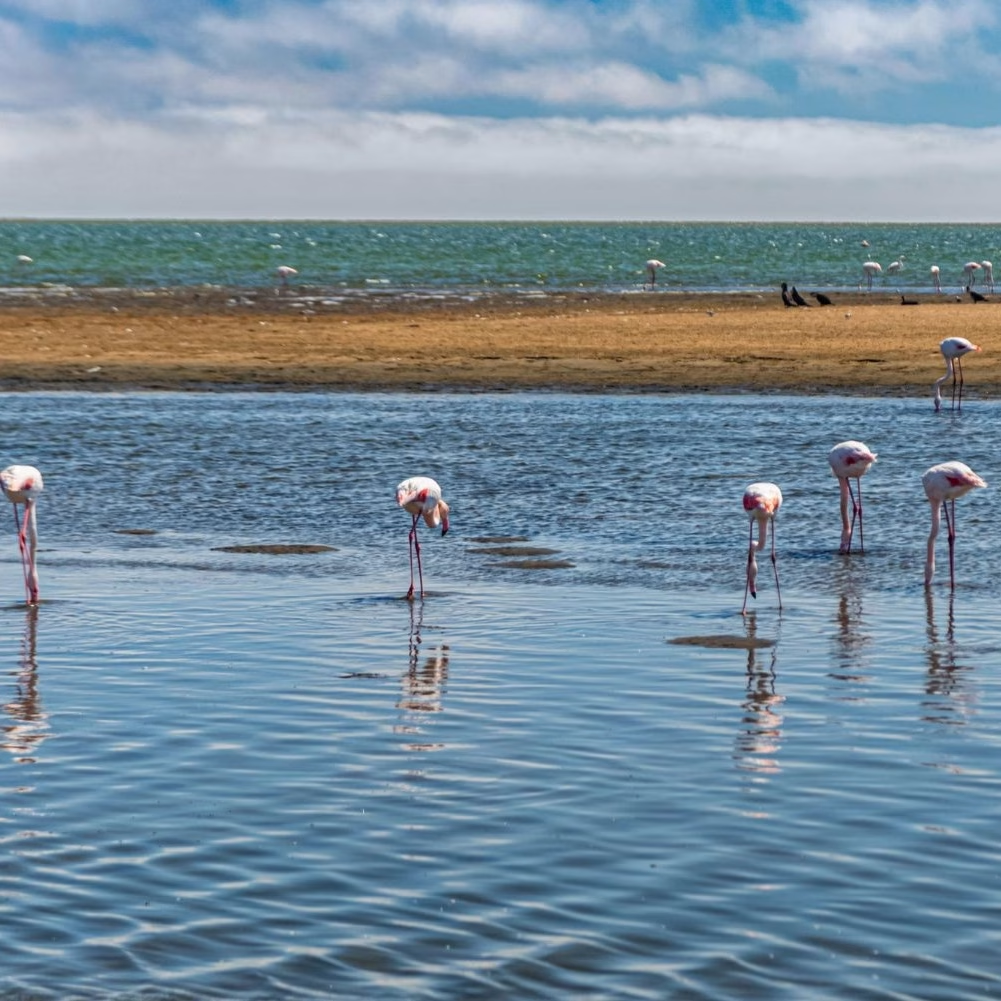
The Namibian Islands' Marine Protected Area, covering almost one million hectares of sea area, including a number of islands and islets,was proclaimed in 2008. Formal regulations pertaining to each island were gazetted in December 2012. Its broad aims are:
Information on the Namibian Islands' Marine Protected Area:
- Government Gazette of the Republic of Namibia, No. 4210 of 16 February 2009. Declaration of the Namibian islands as marine reserve: Marine Resources Act, 2000;
- Government Gazette of the Republic of Namibia, No. 5111 of 31 December 2012. Regulations relating to the Namibian Islands' Marine Protected Area: Marine Resources Act, 2000.
The NIMPA has also been declared an Ecologically and Biologically Significant marine Area (EBSA), together with six other marine areas within Namibia's exclusive economic zone. Additional information on these EBSAs is available at https://cmr.mandela.ac.za/Research-Projects/EBSA-Portal/Namibia/Namibian-EBSA-Status-Assessment-Management.
Marine Environment
The Benguela Current Large Marine Ecosystem (BCLME)
The Benguela Current Large Marine Ecosystem (BCLME) in the southeast Atlantic Ocean is one of the world's four major eastern boundary currents, which undergo intense upwelling of cool, nutrient-rich waters that support high phytoplankton biomasses and abundant forage fish resources. The forage fishes, in turn, are fed upon by numerous predators, including seabirds. The BCLME ranges from approximately Benguela in southern Angola to Algoa Bay in southern South Africa, being bounded in the north and east by the warm Angola and Agulhas currents, respectively.
Namibia's coastline is home to a wide diversity of wildlife, with many endemic seabird species. Seabirds are an integral element of biodiversity and, being top predators and visible, serve as key indicators of the state and health of the marine ecosystem. The Namibian Islands' Marine Protected Area (NIMPA) was proclaimed in 2009, stretching 400 km along the southern Namibian coast, covering almost 10,000 km2, with a key objective to protect the breeding sites and main foraging areas of seabirds along Namibia’s coast. Unfortunately, a management plan has not yet been completed or implemented, there is a lack of human capacity and insufficient funding in the marine conservation sector in Namibia, so the NIMPA is largely ineffective and not fulfilling its mission.
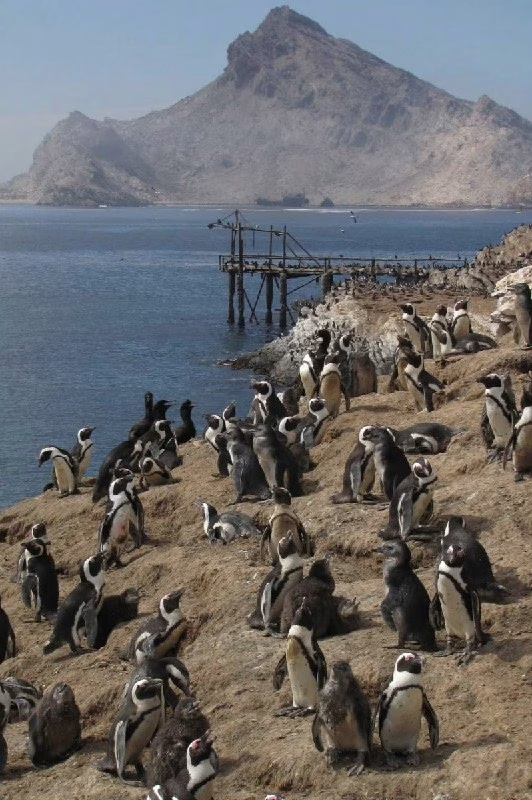
The Namibian crash of sardine and anchovy stocks more than five decades ago showed the shift of a productive upwelling ecosystem to a less efficient system dominated by poor-value species like the bearded goby. This has contributed to the dramatic, ongoing decline in the populations of the African Penguin (>50% since the 1970s), the Cape Gannet (90% since the 1970s), the Bank- and Cape Cormorants (>50% in the last three decades). The main threats facing seabirds in Namibia include a lack of good quality food availability, marine oil pollution and habitat loss. Diseases, such as highly pathogenic Avian Influenza which killed over 500 adult African Penguins in 2019, also pose a threat.